Engineering Optimization for Isolated Island Microgrids
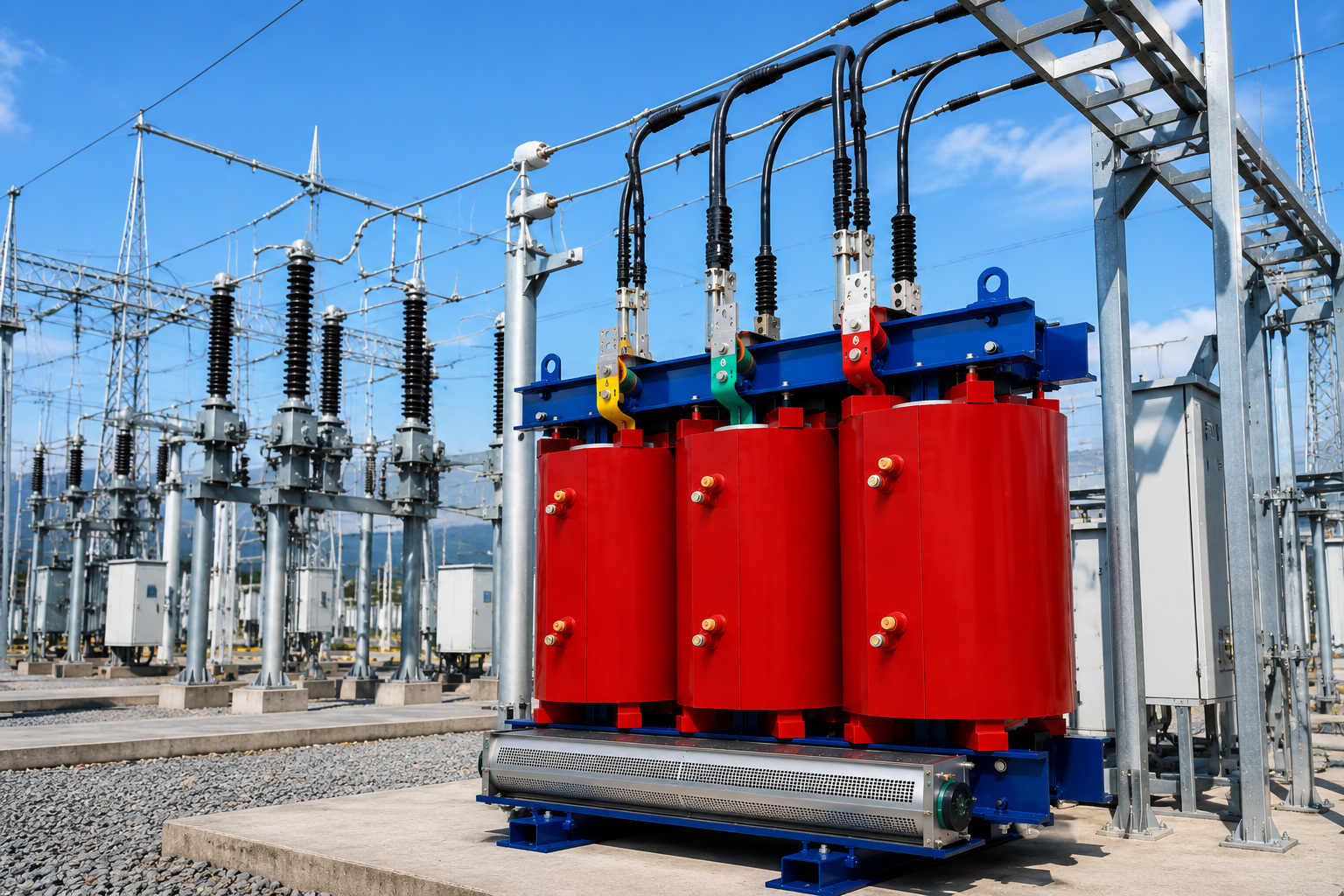
Project Overview
Isolated island microgrids are often built where utility extension is expensive, fuel logistics are unstable, and electrical loads still require dependable 24-hour operation. A typical 550kW off-grid solar-storage system in Southeast Asia needs more than panel and battery sizing. The transformer must handle inverter output, coastal humidity, salt exposure, high ambient temperature, and limited maintenance access.
For EPC teams and project owners, the transformer becomes a reliability component rather than a commodity item. The right SCB13 dry-type transformer specification can reduce fire risk, simplify indoor installation, and support stable voltage conversion between the PV-storage inverter side and the local distribution network.
Selection Summary
| Requirement | Recommended Direction | Engineering Reason |
|---|---|---|
| Application | 550kW off-grid solar-storage microgrid | Supports island loads with no stable utility backup |
| Transformer type | SCB13 cast-resin dry-type transformer | Fire-safe, low maintenance, suitable for indoor power rooms |
| Voltage level | Defined by inverter output and local MV/LV distribution | Prevents mismatch between PCS, RMU, and load feeders |
| Environment | Humidity, salt spray, and high ambient temperature review | Reduces insulation aging and corrosion risk |
| Accessories | Temperature controller, PT100 sensors, enclosure, surge protection | Improves monitoring and site-level protection |
Microgrid Engineering Conditions
Remote island projects usually have compact power rooms, limited spare parts, and a maintenance team that visits the site periodically rather than daily. Transformer selection should therefore start from site conditions, not only from the nominal kVA value.
Load and Capacity Margin
The transformer capacity should be checked against inverter output, battery PCS behavior, peak load, motor starting current, and future expansion. A margin that is too small can create thermal stress. A margin that is too large can raise idle loss and unnecessary capital cost.
Environmental Derating
High ambient temperature, poor ventilation, and solar-heated equipment rooms can reduce usable transformer capacity. For tropical coastal sites, engineering review should include room airflow, transformer enclosure protection, humidity control, and salt corrosion prevention.
Power Quality
Solar-storage systems include inverter-based sources. The transformer specification should consider harmonics, temperature rise, short-circuit impedance, grounding arrangement, and compatibility with protection devices.
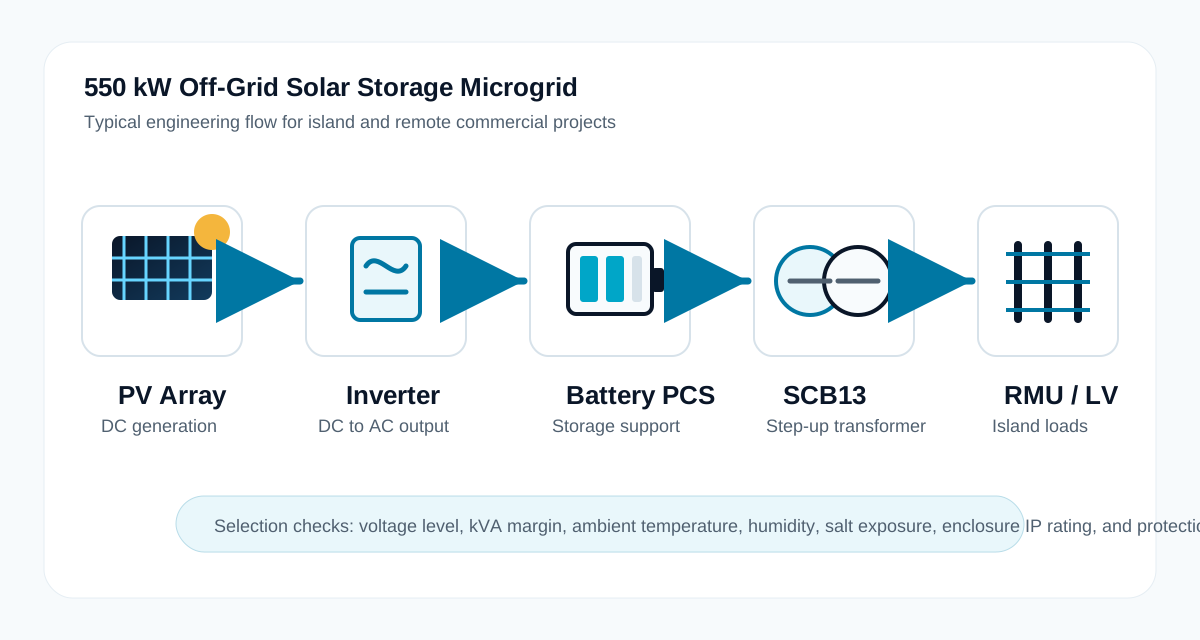
Why SCB13 Dry-Type Transformers Fit Island Microgrids
- Indoor safety: Cast-resin dry-type transformers avoid mineral oil and reduce fire-containment complexity in compact rooms.
- Maintenance simplicity: No oil sampling, leakage control, or oil replacement is required during normal operation.
- Environmental suitability: Proper enclosure and ventilation design can support humid coastal applications.
- Stable operation: SCB13 designs provide efficient voltage conversion for distribution-side loads when sized and protected correctly.
Transformer Specification Checklist
- Confirm the inverter or PCS output voltage and the required distribution voltage.
- Define rated capacity based on continuous load, peak load, and expansion margin.
- Specify frequency, vector group, impedance, tap range, insulation class, and temperature rise.
- Review installation room ventilation, clearance, cable routing, and enclosure IP level.
- Add temperature monitoring, surge protection, and protection coordination with upstream and downstream switchgear.
- Request routine test reports and project-specific drawings before production release.
Commissioning and Maintenance Notes
Before energization, the EPC team should verify insulation resistance, winding resistance, voltage ratio, vector group, torque on terminals, grounding continuity, and PT100 temperature sensor wiring. After commissioning, periodic inspection should focus on dust accumulation, ventilation, cable termination temperature, unusual noise, and alarm records from the temperature controller.
Related Engineering Resources
- SCB13 vs SCB14 transformer comparison
- SCB13 maintenance and lifecycle guide
- Solar farm transformer guide
- Power distribution guide
FAQ
Why choose a dry-type transformer instead of an oil-immersed transformer for an island microgrid?
Dry-type transformers are often preferred for compact indoor power rooms because they avoid oil leakage risk, simplify fire-safety planning, and reduce routine maintenance. Oil-immersed transformers can still be suitable outdoors or for larger utility-style installations, but the site layout and safety requirements must be reviewed.
What information should be included in an RFQ for this type of project?
Include the voltage level, rated capacity, frequency, installation environment, enclosure requirement, cable entry direction, cooling method, protection accessories, project location, applicable standards, and any local utility or EPC specification.
Conclusion
For off-grid solar-storage projects in Southeast Asia, transformer selection has a direct impact on safety, uptime, and long-term operating cost. A well-specified SCB13 dry-type transformer can support compact island microgrids when the design accounts for environmental derating, ventilation, protection coordination, and realistic load growth.
Need Engineering Support?
For project selection, send us the following information:
- Voltage Level
- Capacity
- Installation Environment
- Project Location
Contact: sales@ziyaopower.com
Download This Guide as PDF
Save this technical guide for offline reference. Includes all tables, specifications, and contact information.
Related Articles
Solar Transformer Engineering Errors: What EPC Teams Should Avoid
Common engineering mistakes in solar transformer selection, including undersized capacity, wrong impedance, harmonic heating, poor ventilation, unsuitable enclosure ratings, and incomplete FAT requirements.
Solar Farm Transformer Guide
Complete solar farm transformer guide: S22-M/S13-M pad-mount selection, IEC 60076 vs ANSI C57 standards, outdoor installation, and ROI calculations.