50Hz vs 60Hz Transformer Selection
Engineering Intent
Frequency affects volts-per-hertz, magnetic flux density, losses, noise and temperature rise. A transformer should not be quoted or reused across 50Hz and 60Hz systems without confirming the rated voltage, nameplate frequency and manufacturer review.
This article is written for engineers, EPC buyers and procurement teams who need to turn 50Hz and 60Hz transformer design into a clear technical request instead of a vague product inquiry.
Key Selection Data
| Item | Data to Confirm |
|---|---|
| Check 1 | Utility frequency at destination |
| Check 2 | Rated voltage, tap range and V/Hz limit |
| Check 3 | Load profile, ambient temperature and operating duty |
| Check 4 | Any cross-border equipment reuse or generator backup operation |
Standards and Evidence to Request
- IEC 60076 design frequency references
- Nameplate voltage and frequency confirmation
- Project grid code and utility acceptance requirement
For project approval, request a technical datasheet, outline drawing, wiring or terminal diagram where applicable, routine test report and nameplate information before shipment.
Common Specification Mistakes
- Assuming all export projects are 50Hz
- Applying a fixed derating percentage without checking voltage, flux density and thermal design
- Using a 60Hz-optimized transformer on 50Hz at the same voltage without manufacturer confirmation
- No frequency listed in RFQ
RFQ Checklist
- State 50Hz or 60Hz
- Confirm destination country and grid voltage
- Provide voltage ratio, capacity and duty cycle
- Request nameplate draft and frequency suitability statement before production
Related Product Paths
Ziyao Power can review the single-line diagram, load schedule, panel drawing or tender sheet and convert the requirement into a practical quotation package.
Engineering decision guide
How to apply this topic to a real project
Use 50Hz vs 60Hz Transformer Selection to establish a common engineering basis before comparing transformer options. Define every value with its operating condition, units, tolerance and reference, because a familiar term can represent different design or contractual requirements.
Read nameplate ratings together rather than separately. Rated power, voltage ratio, frequency, vector group, impedance, losses, insulation level, temperature rise, cooling method and tap range interact with system fault duty, voltage regulation, protection and lifecycle cost.
A sound decision records the calculation inputs, selected margin, rejected alternatives and the values that must be guaranteed in the supplier data sheet. This lets procurement compare compliant configurations instead of comparing model names alone.
Engineering checks
- Confirm load profile, diversity, future growth and the difference between connected and simultaneous demand.
- Check voltage ratio, frequency, vector group and earthing compatibility with the existing network.
- Review impedance, losses, thermal duty and overload assumptions on the same rating and temperature basis.
- Define insulation, environmental, accessory, monitoring and test requirements before requesting a price.
Records to request or retain
- Load calculation and design assumptions
- Transformer schedule and guaranteed data sheet
- Network, protection and voltage-drop studies
- Technical comparison and deviation register
References to confirm for this topic
Worked examples support early selection but are not a final design. The responsible engineer must verify the calculation method and apply the contracted standard, utility rules and actual site conditions.
Related Products
Recommended Transformer Solutions for the applications covered in this guide.
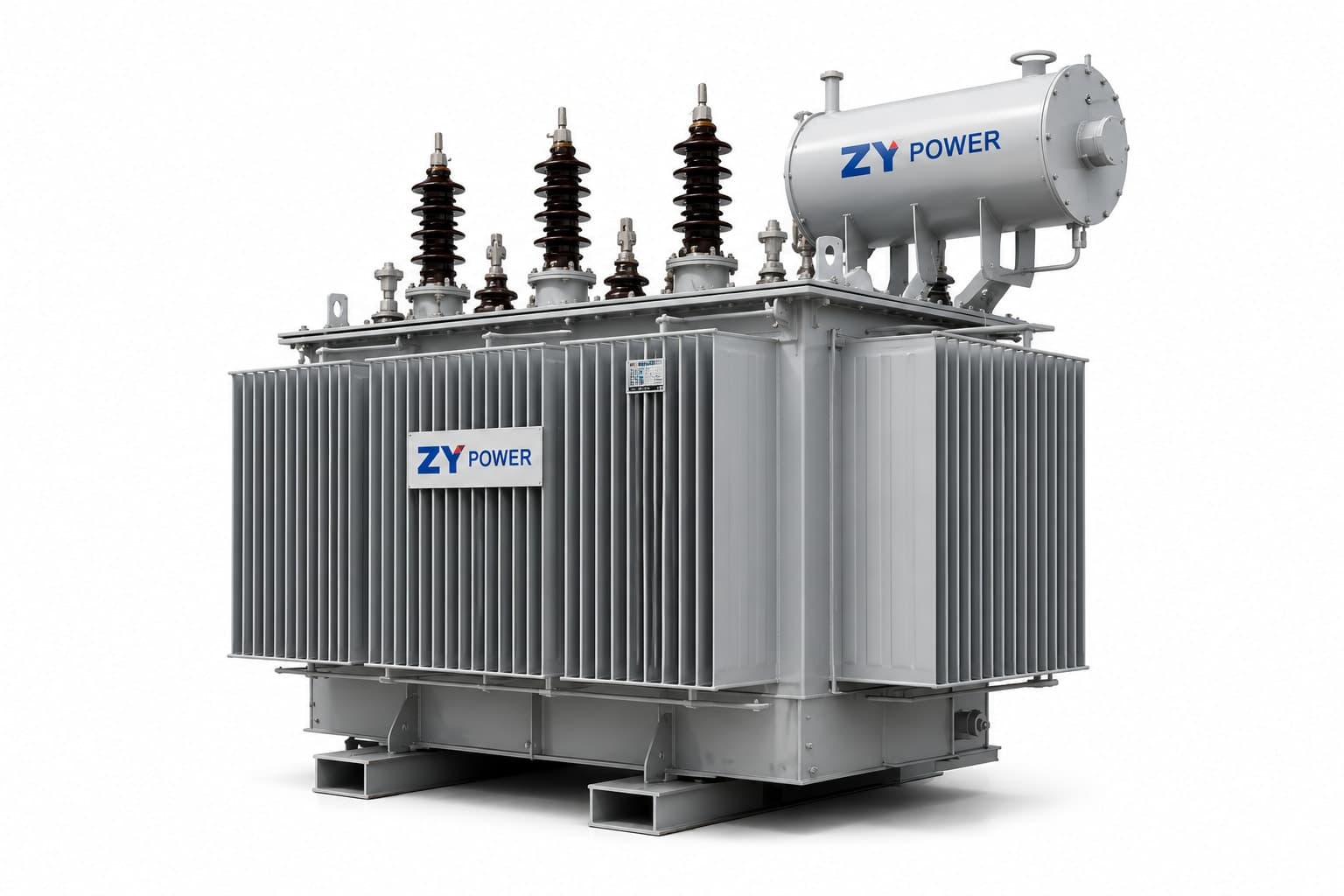
S13 Oil-Immersed Distribution Transformer
S13-500/10
S13 series three-phase oil-immersed distribution transformer with hermetically sealed corrugated tank. Rated 500kVA, primary 10kV, secondary 0.4kV. Uses a silicon steel core with low-loss oil-immersed transformer design for rural electrification, industrial distribution and utility networks.
View detailsS22 Ultra-Low Loss Oil-Immersed Transformer 500kVA
S22-500/10
S series three-phase oil-immersed distribution transformer with hermetically sealed corrugated tank. Rated 500kVA, primary 10kV, secondary 0.4kV. Features amorphous alloy core for ultra-low no-load loss, exceeding GB Class 2 efficiency. Compliant with IEC 60076 and GB 1094 standards. Outdoor installation for utility networks, rural electrification and industrial distribution.
View detailsS20 Low-Loss Oil-Immersed Transformer 630kVA
S20-630/10
S series three-phase oil-immersed distribution transformer with hermetically sealed corrugated tank. Rated 630kVA, primary 10kV, secondary 0.4kV. Optimized core design for reduced losses with competitive pricing. Compliant with IEC 60076 and GB 1094 standards. Outdoor installation for utility networks, rural electrification and industrial distribution.
View detailsNeed a Quote for This Application?
Tell us your voltage, capacity, quantity, and destination. Our engineering team will confirm the right Transformer Solutions and prepare a quotation.
Download This Guide as PDF
Save this technical guide for offline reference. Includes all tables, specifications, and contact information.